Blog
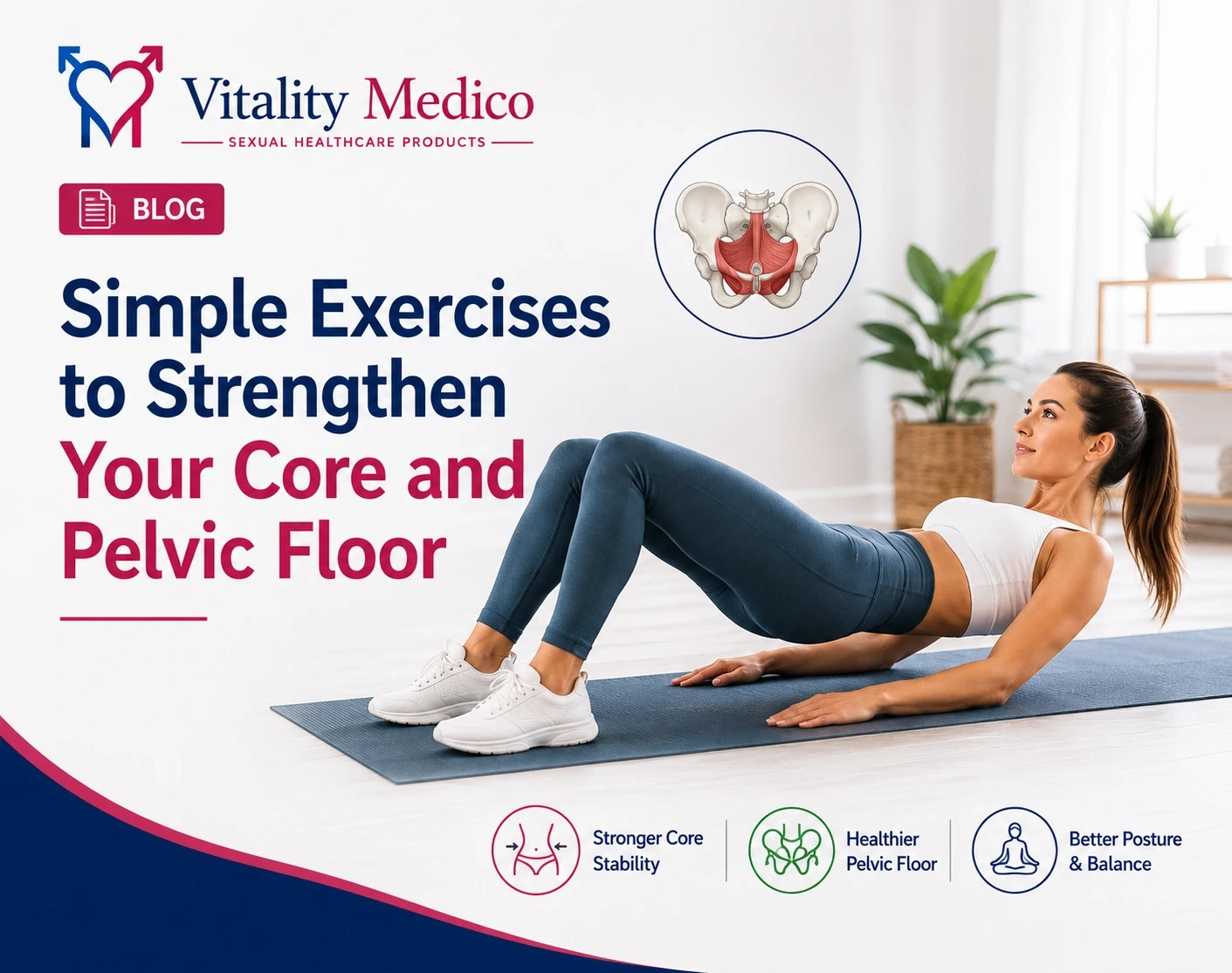
Simple Exercises to Strengthen Your Core and Pelvic Floor
Emily Carter · 28 January 2026 · 7 min read · 2,071 views
Strong core muscles and a healthy pelvic floor provide the foundation for almost every movement you make. Whether you're walking, lifting shopping bags, climbing stairs, exercising, or simply standing up from a chair, these muscle groups work together to stabilise your body and protect your spine.
When the core or pelvic floor muscles become weak or poorly coordinated, everyday activities may become more difficult. Some people experience reduced balance, lower back discomfort, bladder leakage, or reduced confidence during exercise. Strengthening these muscles together may help improve stability, posture, movement, and overall pelvic health.
This guide introduces three simple exercises that help strengthen both the core and pelvic floor. They are suitable for people with a basic level of fitness who want to improve strength gradually while using safe, controlled movements.
If you're looking to support your pelvic health at home, explore our Pelvic Floor Therapy Products .
Core and Pelvic Floor Exercises at a Glance
-
Improve core stability and balance
-
Support the spine and pelvis
-
Help strengthen the pelvic floor muscles
-
May improve bladder control in some people
-
Suitable for beginners with a basic fitness level
-
Best results come from regular practice and good technique
How the Core and Pelvic Floor Work Together
Many people think the "core" only refers to the visible abdominal muscles, often called the "six-pack." In reality, your core is made up of several deep muscle groups, including the abdominal muscles, back muscles, diaphragm, and pelvic floor.
These muscles work together like a natural support system. As you breathe, lift, bend, cough, or exercise, they automatically coordinate to stabilise your trunk and reduce strain on your spine and pelvis.
When one part of this system becomes weak or doesn't work efficiently, the others often have to work harder. Strengthening the core and pelvic floor together helps restore balance and supports healthy movement.
Pelvic health physiotherapists and organisations such as the International Continence Society (ICS) recognise pelvic floor muscle training as an important part of conservative management for many pelvic floor conditions.
Benefits of Core and Pelvic Floor Exercises
Regular training may help:
-
Improve balance and stability
-
Support the lower back
-
Improve posture
-
Increase core strength
-
Support pelvic organ health
-
Improve bladder control in some people
-
Reduce the risk of injury during everyday activities
-
Build confidence during exercise
Improvements usually happen gradually through regular practice rather than intense workouts.
Before You Begin
Always exercise within your comfort level.
Before starting:
-
Wear comfortable clothing.
-
Choose a stable, non-slip surface.
-
Move slowly and with control.
-
Stop if you experience pain.
-
Focus on quality rather than speed.
Breathing Tip
Avoid holding your breath.
Instead, breathe in as you prepare for the movement and gently breathe out during the effort while lightly engaging your pelvic floor muscles. This breathing pattern helps improve stability and is commonly recommended by pelvic health physiotherapists.
If you're new to these exercises, begin with one set of 8 to 10 repetitions. As your strength improves, gradually increase to three sets.
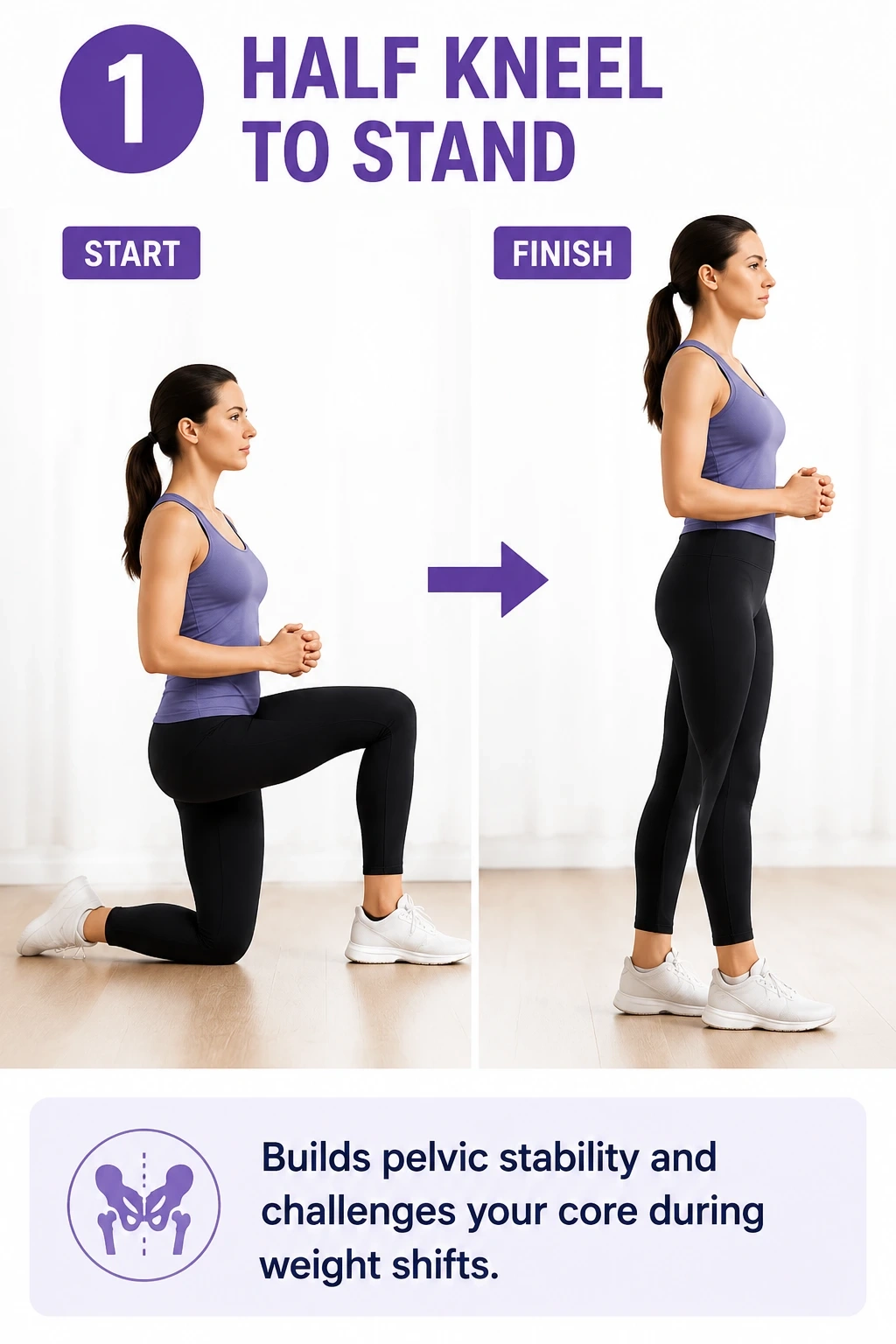
Exercise 1: Half Kneel to Stand
This exercise improves balance, hip stability, and coordination while encouraging the core and pelvic floor muscles to work together.
How to Perform
-
Begin in a half-kneeling position with one knee on the floor and the opposite foot placed in front.
-
Engage your abdominal muscles and gently activate your pelvic floor.
-
Push through your front foot to stand.
-
Slowly lower yourself back into the starting position.
-
Repeat before changing sides.
Recommended: 8 to 10 repetitions on each leg, progressing to 3 sets.
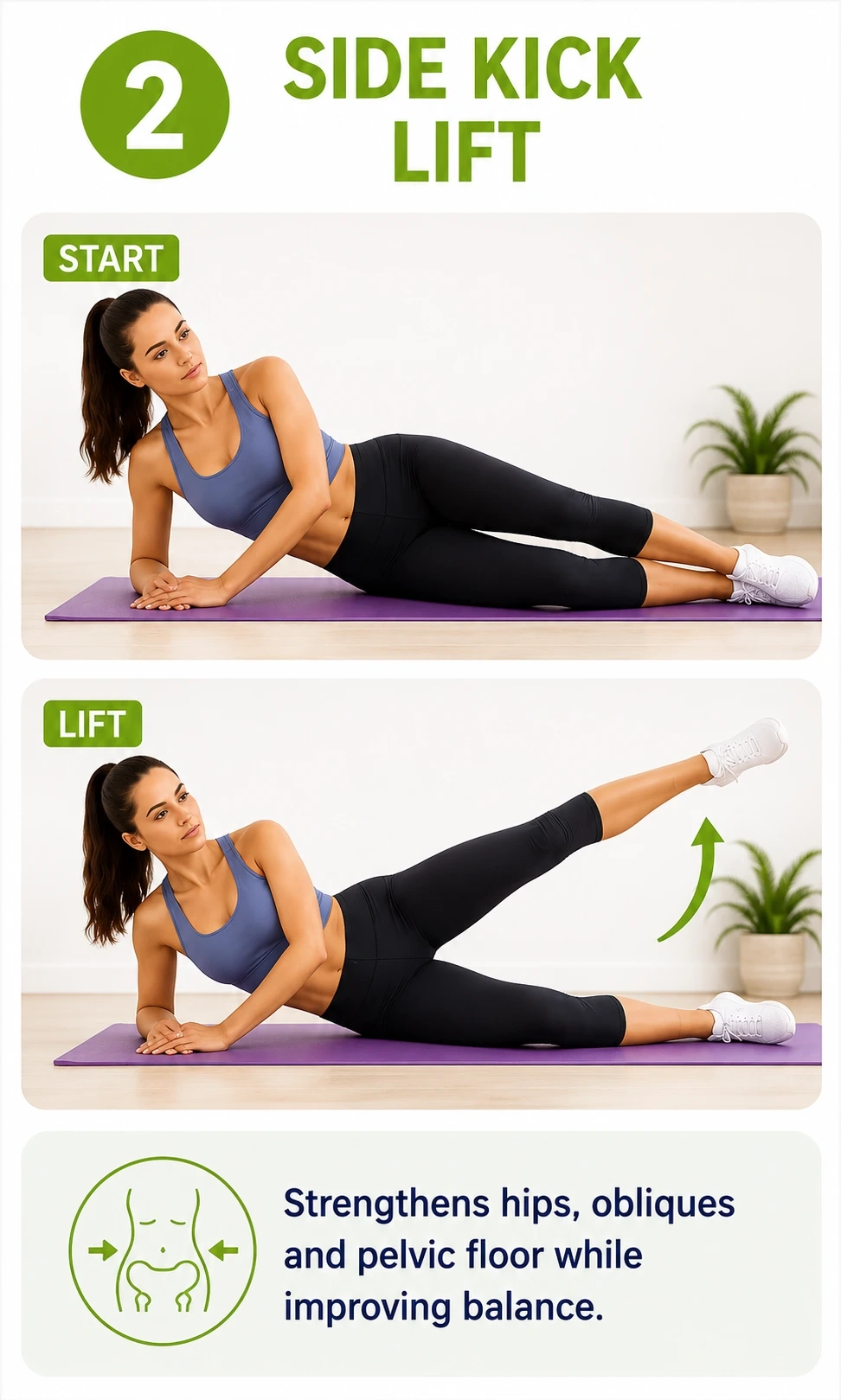
Exercise 2: Side Kick Lift
This movement strengthens the hips, oblique muscles, and pelvic floor while improving side-to-side stability.
How to Perform
-
Support yourself on one hand or forearm.
-
Lift your hips until your body forms a straight line.
-
Raise your top leg in a slow, controlled side kick.
-
Lower the leg with control.
-
Repeat on both sides.
Recommended: 8 to 10 repetitions on each side, progressing to 3 sets.
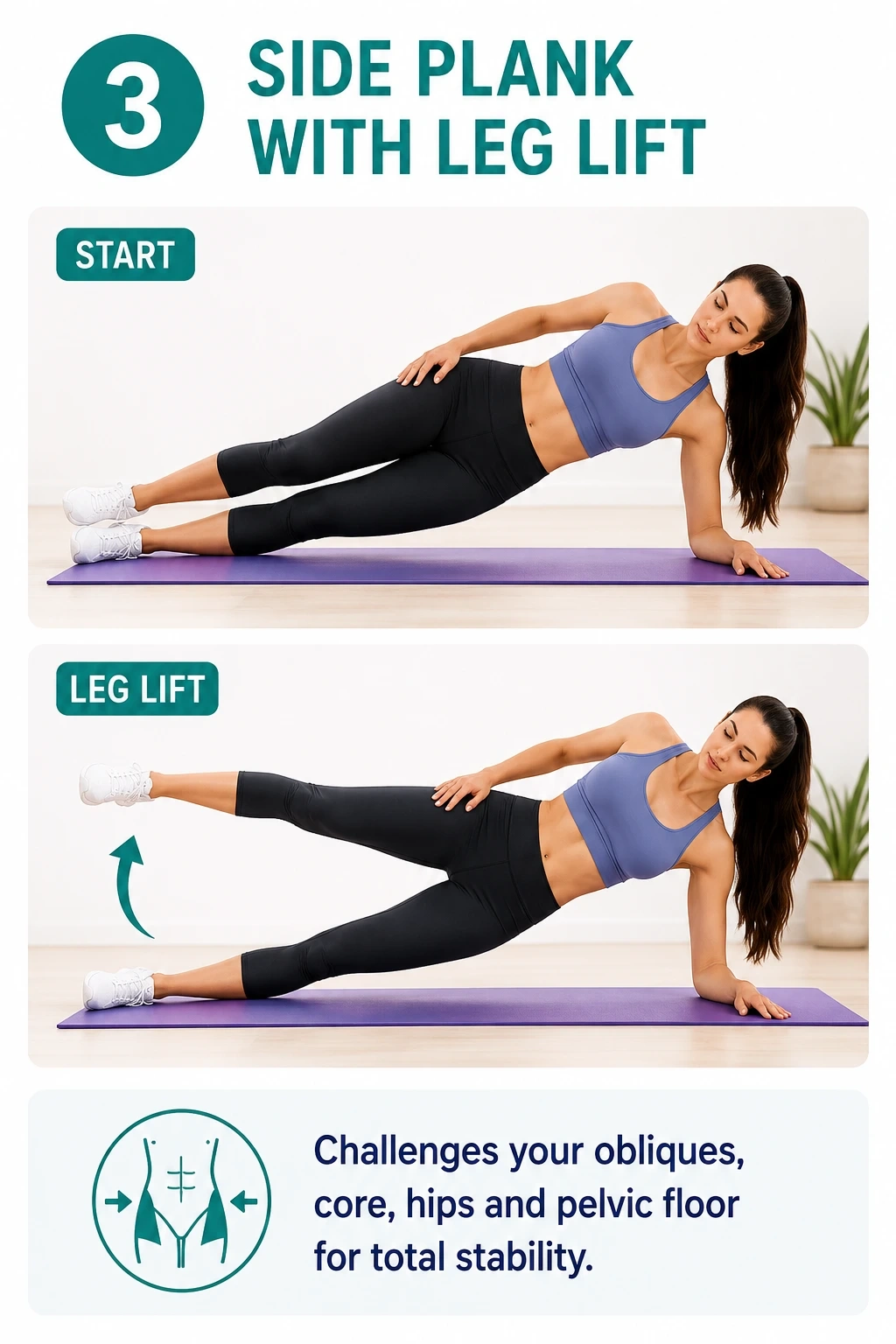
Exercise 3: Side Plank with Leg Lift
This exercise challenges several important muscle groups simultaneously, including the obliques, hips, lower back, and pelvic floor.
How to Perform
-
Lie on your side with your elbow beneath your shoulder.
-
Lift your hips into a side plank.
-
Slowly raise your top leg.
-
Hold briefly before lowering the leg.
-
Return to the starting position.
If needed, bend your lower knee for additional support.
Recommended: 8 to 10 repetitions on each side, progressing to 3 sets.
Tips for Better Results
Building core and pelvic floor strength takes time. Performing exercises regularly with good technique is usually more effective than doing long or intense workouts occasionally.
Keep these tips in mind:
-
Focus on slow, controlled movements.
-
Breathe normally throughout each exercise.
-
Gently engage your pelvic floor rather than squeezing as hard as possible.
-
Increase repetitions gradually as your strength improves.
-
Allow your body time to recover between exercise sessions.
-
Stop if you experience pain or worsening symptoms.
Consistency is one of the most important factors in improving core stability and pelvic floor function.
Can These Exercises Help Bladder Control?
For some people, yes.
Research suggests that pelvic floor muscle training may help improve bladder control and reduce symptoms of urinary incontinence when performed consistently and with the correct technique.
If you have persistent bladder leakage, pelvic pain, or symptoms of pelvic floor dysfunction, a pelvic health physiotherapist can assess your condition and recommend a personalised treatment plan.
When Should You Speak to a Healthcare Professional?
Although these exercises are suitable for many people, it's best to seek professional advice before starting if you have:
-
Persistent pelvic pain
-
Recent abdominal or pelvic surgery
-
Pregnancy-related concerns
-
Pelvic organ prolapse
-
Significant urinary or bowel symptoms
-
Severe lower back pain
-
Difficulty performing everyday activities because of pelvic floor symptoms
Early assessment can help identify the underlying cause and ensure you're following the most appropriate exercise programme.
Frequently Asked Questions
Can core exercises strengthen the pelvic floor?
Yes. Many core exercises naturally activate the pelvic floor muscles alongside the abdominal and hip muscles, especially when combined with proper breathing and good technique.
How often should I do these exercises?
Many physiotherapists recommend practising pelvic floor and core exercises several times each week. Your ideal routine depends on your fitness level, symptoms, and advice from your healthcare professional.
Can these exercises help urinary incontinence?
They may help improve pelvic floor muscle strength and bladder control in some people. However, persistent urinary leakage should always be assessed by a qualified healthcare professional.
Can men benefit from pelvic floor exercises?
Absolutely. Pelvic floor exercises can help both men and women improve core stability, bladder control, pelvic health, and recovery following certain pelvic conditions or surgery.
How long does it take to notice results?
Everyone progresses at a different pace. Some people notice improvements within a few weeks, while others may need several months of regular practice before experiencing significant changes.
Supporting Your Pelvic Health
Exercise is only one part of maintaining a healthy pelvic floor.
Depending on your symptoms and treatment plan, you may also benefit from:
-
Pelvic Floor Wands for guided trigger point therapy.
-
Silicone Vaginal Dilators for vaginal rehabilitation and pelvic floor therapy.
Using the right products alongside professional guidance can help support long-term pelvic health.
Final Thoughts
Improving your core strength and pelvic floor function doesn't require complicated equipment or advanced fitness levels. Simple, well controlled exercises performed consistently can help improve stability, posture, movement, and overall pelvic health.
Remember that progress is gradual. Focus on proper technique, breathe naturally during each movement, and increase the difficulty as your strength improves. Combined with healthy lifestyle habits and professional guidance when needed, these exercises can become an important part of your long-term wellbeing.
Learn More
You may also find these guides helpful:
Suggestions & Comments
Share your thoughts about this article. Comments are reviewed before they appear publicly.
Loading comments…