Blog
How to Use a Vaginal Dilator for the First Time
Sarah Mitchell · 15 June 2026 · 7 min read · 1,228 views
How to Use a Vaginal Dilator Safely: A Step-by-Step Guide
Vaginal dilators are commonly used as part of pelvic floor therapy to help improve vaginal flexibility, reduce discomfort during penetration, and support recovery after certain medical conditions or treatments. While using a vaginal dilator for the first time may feel intimidating, the process is usually gentle and becomes more comfortable with regular practice.
This guide explains how to use a vaginal dilator safely, what to expect during treatment, and how to get the best results at home.
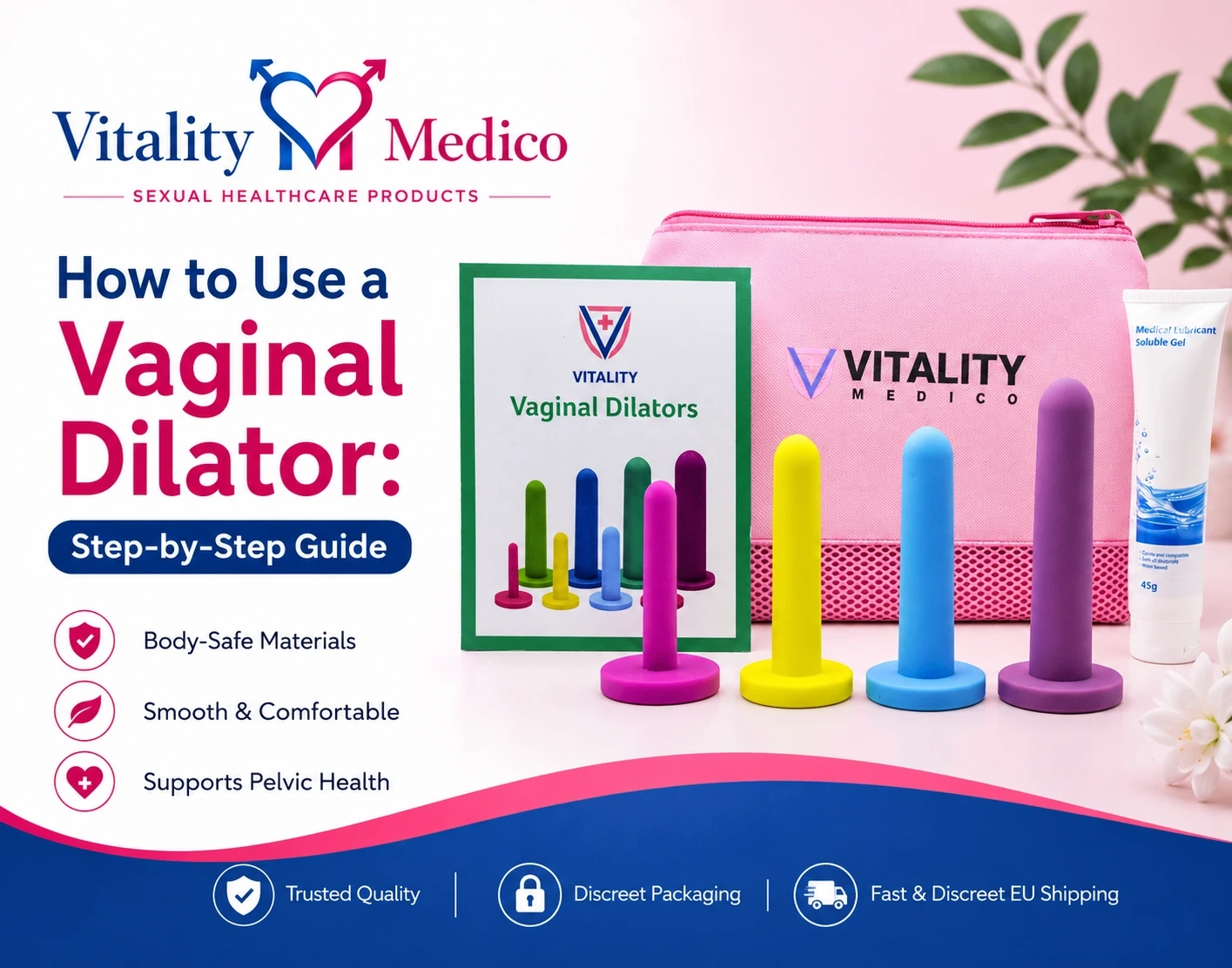
If your healthcare professional has recommended vaginal dilator therapy, using a high-quality dilator can make treatment more comfortable. Our Medical-Grade Silicone Vaginal Dilator Set (Small) includes four graduated sizes made from soft, body-safe silicone to support gentle, progressive therapy at home. You can explore the collection here: https://vitalitymedico.eu/silicone-vaginal-dilator-set-small.
Vaginal Dilator Therapy at a Glance
-
Suitable for gradual vaginal stretching under professional guidance
-
Often recommended for pelvic floor muscle tightness, vaginismus, scar tissue, or discomfort during penetration
-
Start with the smallest size and progress gradually
-
Use a water-based lubricant for comfort
-
Regular, gentle practice is more effective than forcing progress
What Is a Vaginal Dilator?
A vaginal dilator is a smooth, tube-shaped medical device designed to gently stretch the vaginal tissues and help the pelvic floor muscles relax. They are available in different sizes, allowing you to progress gradually as your comfort improves.
Our Silicone Vaginal Dilator Set (Small) is made from soft, medical-grade silicone that is body-safe, BPA-free, latex-free, and reusable. The graduated sizes make it easy to begin with the smallest dilator and slowly move to larger sizes as recommended by your healthcare professional.
Who May Benefit from Vaginal Dilator Therapy?
A healthcare professional may recommend vaginal dilator therapy for people experiencing:
-
Vaginismus
-
Pelvic floor muscle tightness
-
Pain during intercourse
-
Vaginal narrowing
-
Recovery after pelvic surgery
-
Scar tissue following childbirth
-
Menopause-related vaginal tightness
-
Recovery after pelvic radiotherapy
-
Anxiety related to vaginal penetration
Every person's treatment plan is different, so always follow the advice of your healthcare provider.
Preparing Before You Begin
Choose a quiet, private place where you can relax without interruptions.
Before starting:
-
Wash your hands thoroughly.
-
Clean your dilator with warm water and mild soap.
-
Dry it completely.
-
Apply a generous amount of water-based lubricant to both the dilator and the vaginal opening.
-
Take a few slow, deep breaths to help relax your pelvic floor muscles.
Avoid silicone-based lubricants if your dilator is made from silicone, as they may affect the material over time.
Step 1: Find a Comfortable Position
Most people find it easiest to lie on their back with their knees bent and feet flat on the bed.
You can also:
-
Place pillows under your knees for support.
-
Lie on your side with your knees slightly bent.
-
Choose any position that allows your pelvic floor muscles to stay relaxed.
Step 2: Start with the Smallest Dilator
Always begin with the smallest size in your set.
The dilator should feel snug but should not cause sharp pain. Mild stretching or pressure is normal.
Trying to move to a larger size too quickly can make treatment uncomfortable.
Step 3: Insert the Dilator Slowly
Place the rounded tip at the entrance of the vagina.
Slowly insert the dilator using gentle, steady pressure.
Aim slightly towards your lower back rather than straight upwards.
If you feel your muscles tighten, pause and take several slow breaths before continuing.
Never force the dilator.
Step 4: Relax Your Pelvic Floor
Once the dilator is comfortably inserted, focus on relaxing your body.
Breathing slowly helps reduce muscle tension.
Some people find it helpful to gently tighten and then relax their pelvic floor muscles before continuing.
The goal is to allow the muscles to release naturally rather than forcing them to stretch.
Step 5: Gentle Movement
Leave the dilator in place for a few minutes.
Then gently:
-
Move it in and out a short distance.
-
Rotate it slightly.
-
Apply light pressure towards areas of muscle tightness if recommended by your physiotherapist.
These movements help improve flexibility and encourage the muscles to relax.
Step 6: Remove the Dilator
Remove the dilator slowly and comfortably.
Wash it immediately using warm water and mild soap, dry it thoroughly, and store it in a clean, dry place.
How Long Should Each Session Last?
Most sessions last around 10 to 15 minutes.
Many healthcare professionals recommend using vaginal dilators three to four times per week, allowing a rest day between sessions.
Following a regular routine is usually more beneficial than occasional longer sessions.
When Should You Increase the Size?
Move to the next size only when you can comfortably insert and use your current dilator without pain or significant discomfort.
Progress should always feel gradual.
There is no need to rush through the sizes. Everyone progresses at their own pace.
Common Mistakes to Avoid
Avoid these common mistakes:
-
Using too much force
-
Skipping lubricant
-
Holding your breath
-
Progressing to a larger size too quickly
-
Treating for longer than recommended
-
Forgetting to clean the dilator
-
Continuing if you experience severe pain
Gentle, consistent therapy is usually more successful than trying to achieve rapid results.
Can Vaginal Dilator Therapy Hurt?
You may notice mild stretching or pressure, but treatment should not cause severe pain.
If you experience sharp pain, bleeding, or worsening symptoms, stop using the dilator and seek advice from your healthcare provider.
When Should You Not Use a Vaginal Dilator?
Avoid vaginal dilator therapy unless advised by your healthcare professional if you:
-
Have an active vaginal infection
-
Have an untreated urinary tract infection
-
Have unexplained vaginal bleeding
-
Recently had pelvic surgery without medical clearance
-
Experience severe pelvic pain during insertion
-
Are pregnant unless advised by your maternity care team
Frequently Asked Questions
How often should I use a vaginal dilator?
Many treatment plans recommend three to four sessions each week, but always follow your healthcare provider's advice.
Do I need lubricant?
Yes. A water-based lubricant helps reduce friction and improves comfort.
Can beginners use vaginal dilators?
Yes. Most treatment programmes begin with the smallest size before gradually increasing.
How long does it take to see results?
Some people notice improvements within a few weeks, while others require several months. Progress depends on your condition and how consistently you follow your treatment plan.
Can vaginal dilators help painful intercourse?
When pain is related to pelvic floor muscle tightness or vaginal narrowing, vaginal dilators may help as part of a personalised treatment programme.
How do I clean my vaginal dilator?
Wash it with warm water and mild soap before and after every use. Dry it thoroughly before storing it.
Final Thoughts
Using a vaginal dilator safely takes patience, consistency, and the right technique. Starting with a small, comfortable size and progressing gradually allows the pelvic floor muscles and surrounding tissues to adapt over time.
If your healthcare professional recommends vaginal dilator therapy, choosing a high-quality medical-grade silicone dilator set can improve comfort and make treatment easier. Remember that every recovery journey is different, so progress at your own pace and seek professional advice if symptoms persist or worsen.
Related Guides
-
Pelvic Floor Therapy Guide
-
Medical Lubricant Soluble Gel
Suggestions & Comments
Share your thoughts about this article. Comments are reviewed before they appear publicly.
Loading comments…