Blog
How to Relax Tight Pelvic Floor Muscles Naturally
Emily Carter · 11 July 2026 · 11 min read · 15,942 views
Medically Reviewed by: Pelvic Health Physiotherapist (Recommended)
Many people think pelvic floor problems are always caused by weak muscles. In reality, the opposite can also be true. Pelvic floor muscles can become too tight, making it difficult for them to relax and function properly. This may lead to pelvic pain, discomfort during sex, bladder problems, constipation, and ongoing muscle tension.
Like every other muscle in the body, your pelvic floor needs both strength and flexibility. A muscle that stays constantly contracted cannot work efficiently. Before strengthening exercises such as Kegels are introduced, tight pelvic floor muscles often need to relax first.
The good news is that gentle stretching, breathing techniques, pelvic floor physiotherapy, and the right home exercises can help reduce muscle tension and improve pelvic health over time.
In this guide, you'll learn what causes tight pelvic floor muscles, the symptoms to look out for, and simple exercises that may help you relax your pelvic floor naturally.
If you're working on improving your pelvic health, explore our Pelvic Floor Therapy Products, Medical Grade Silicone Pelvic Wand, and Medical Grade Silicone Vaginal Dilators.
Tight Pelvic Floor Muscles at a Glance
-
Tight pelvic floor muscles are sometimes called a hypertonic pelvic floor.
-
Muscle tension may cause pelvic pain, bladder symptoms, constipation, and painful intercourse.
-
Relaxation is often just as important as strengthening.
-
Gentle stretching and diaphragmatic breathing may help reduce muscle tension.
-
Pelvic floor physiotherapy is commonly recommended for persistent symptoms.
-
Recovery is possible with the right treatment plan.
What Is a Tight Pelvic Floor?
Your pelvic floor is a group of muscles and connective tissues that stretches from the pubic bone at the front of your pelvis to the tailbone at the back. These muscles support your bladder, bowel, and reproductive organs while helping control urination, bowel movements, and sexual function.
Normally, the pelvic floor muscles tighten when needed and fully relax afterwards.
When these muscles remain tense or cannot relax properly, the condition is often referred to as a hypertonic pelvic floor or tight pelvic floor muscles.
Unlike weak pelvic floor muscles, overly tight muscles stay contracted for long periods, which may cause discomfort and interfere with normal daily activities.
Why Do Pelvic Floor Muscles Become Tight?
There isn't one single cause.
For many people, several factors contribute over time.
Common causes include:
-
Long-term stress or anxiety
-
Chronic pelvic pain
-
Previous pelvic surgery
-
Childbirth
-
Trauma or painful sexual experiences
-
Vaginismus
-
Endometriosis
-
Frequent constipation
-
Repeatedly delaying bowel movements or urination
-
Poor posture
-
Weak hip or core muscles
-
Heavy lifting with poor technique
-
High-impact exercise without adequate recovery
Sometimes the body responds to pain by tightening the pelvic floor muscles as a protective mechanism. Unfortunately, this can create an ongoing cycle where muscle tension leads to more pain, causing even greater muscle tightness.
Common Symptoms of a Tight Pelvic Floor
Symptoms often develop gradually and may become worse over time.
You may experience:
-
Pelvic pain
-
Lower back pain
-
Hip pain
-
Pain during sex
-
Pain during pelvic examinations
-
Difficulty inserting tampons
-
Constipation
-
Difficulty emptying your bowels
-
Feeling that your bladder doesn't empty completely
-
Frequent urination
-
Sudden urges to urinate
-
Pain when sitting for long periods
-
Pelvic pressure or heaviness
These symptoms can also occur with other pelvic health conditions, so it's important to seek a professional assessment if symptoms continue.
How the Core, Hips and Pelvic Floor Work Together
Your pelvic floor doesn't work alone.
It forms part of your body's deep stabilising system alongside your diaphragm, abdominal muscles, lower back muscles, and hips.
When these muscles work together efficiently, they help:
-
Support your spine
-
Improve posture
-
Stabilise the pelvis
-
Improve bladder and bowel control
-
Reduce unnecessary muscle tension
If your hips or core are weak or stiff, the pelvic floor often compensates by working harder than it should. Over time, this may contribute to muscle tightness and discomfort.
For this reason, treatment often includes exercises for the hips, core, and breathing, rather than focusing only on the pelvic floor.
Can You Relax Tight Pelvic Floor Muscles Naturally?
In many cases, yes.
Gentle movement, breathing exercises, stretching, and pelvic floor physiotherapy may help reduce muscle tension over time.
It's important to remember that relaxation comes before strengthening.
Many people immediately start doing Kegel exercises, believing they will solve every pelvic floor problem. However, strengthening muscles that are already too tight may actually make symptoms worse.
A healthcare professional or pelvic floor physiotherapist can assess whether your muscles need relaxation, strengthening, or a combination of both.
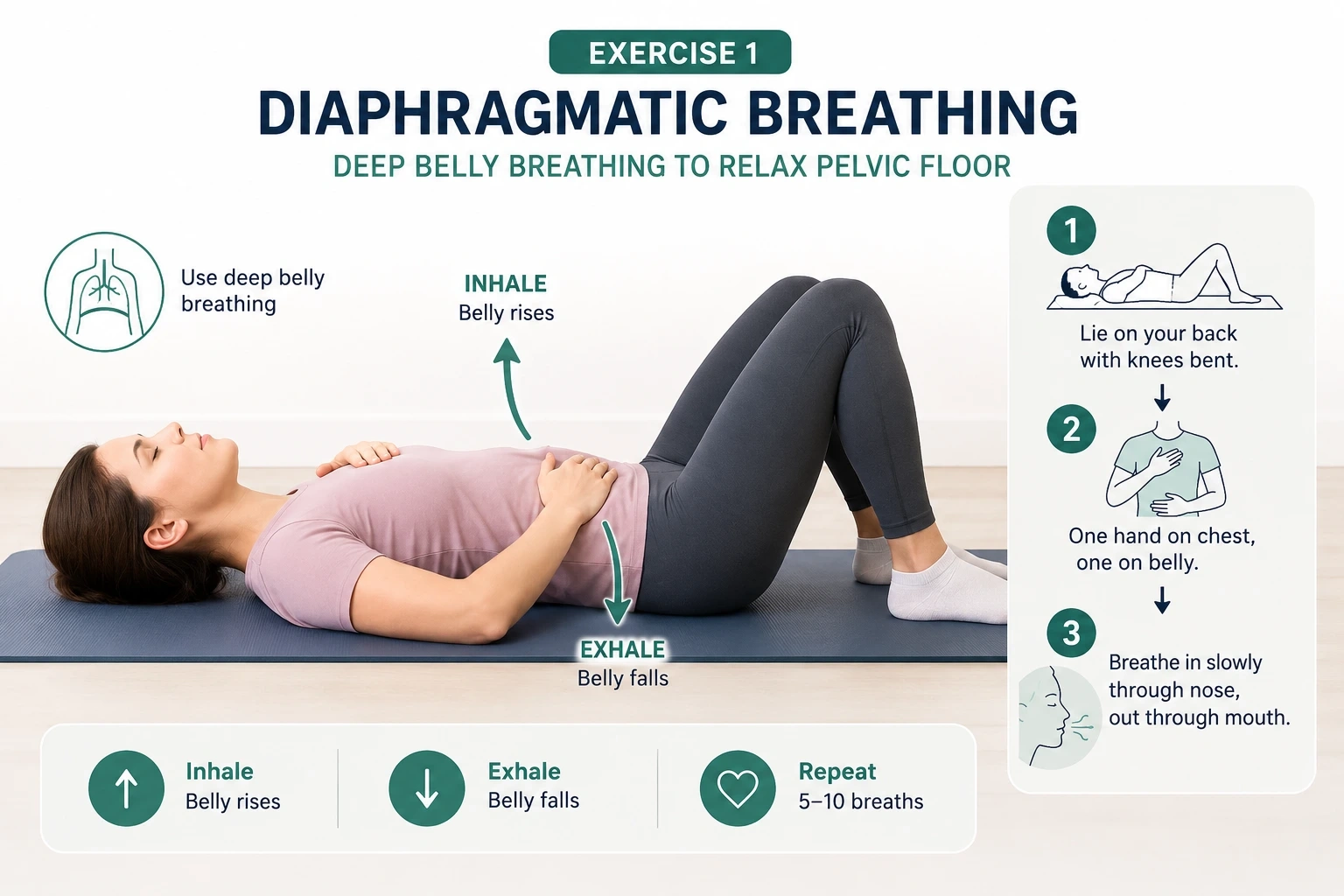
Exercise 1: Diaphragmatic Breathing
One of the simplest ways to relax the pelvic floor is through diaphragmatic breathing, sometimes called deep belly breathing.
As you inhale, your diaphragm moves downward and your pelvic floor naturally lengthens. As you exhale, both muscles gently return to their resting position.
How to Perform
-
Lie comfortably on your back with your knees bent.
-
Place one hand on your chest and the other on your abdomen.
-
Slowly breathe in through your nose, allowing your abdomen to rise.
-
Keep your chest as relaxed as possible.
-
Breathe out slowly through your mouth.
-
Repeat for five to ten slow breaths.
Practising this exercise for a few minutes each day may help reduce pelvic floor muscle tension.
Exercise 2: Deep Supported Squat
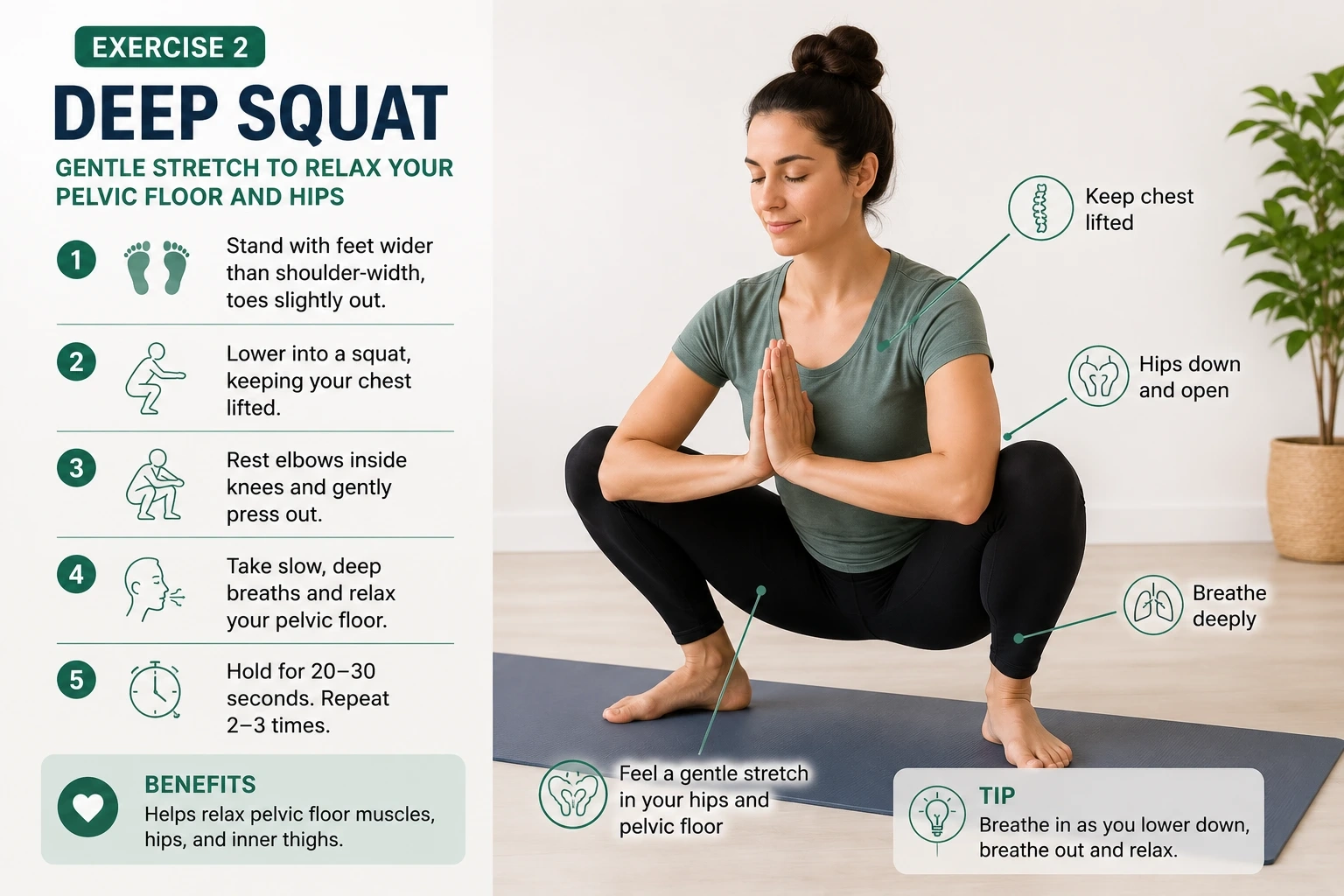
A deep squat gently stretches the pelvic floor, hips, and inner thighs.
How to Perform
-
Stand with your feet slightly wider than shoulder-width apart.
-
Turn your toes slightly outward.
-
Slowly lower into a comfortable squat.
-
Rest your elbows inside your knees.
-
Hold the stretch while taking slow diaphragmatic breaths.
-
Return to standing slowly.
Hold for 20 to 30 seconds and repeat several times if comfortable.
Exercise 3: Figure Four Stretch
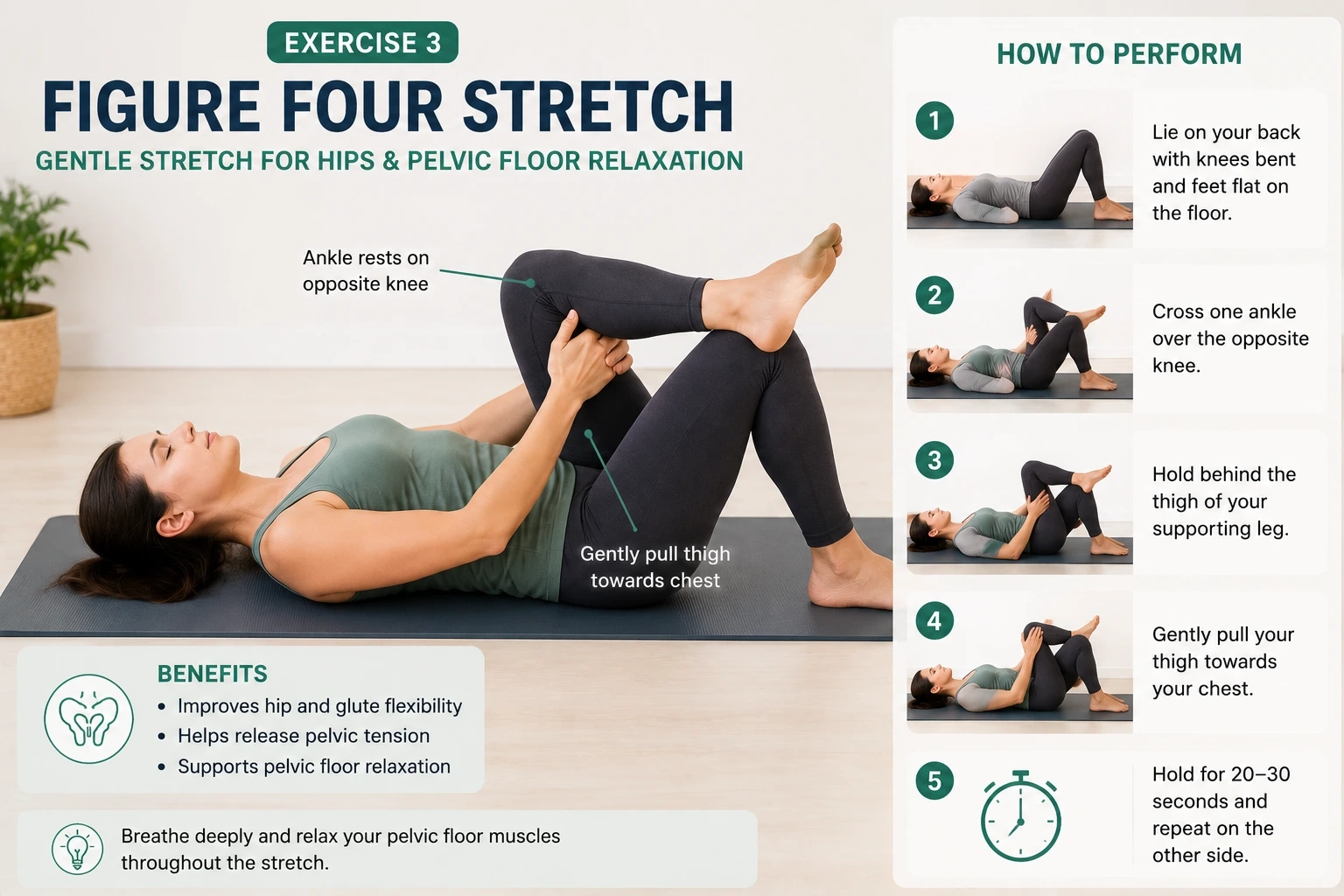
This stretch helps improve flexibility in the hips and gluteal muscles, which often become tight alongside the pelvic floor.
How to Perform
-
Lie on your back.
-
Cross one ankle over the opposite knee.
-
Hold the back of your supporting thigh.
-
Gently pull both legs toward your chest.
-
Hold for 20 to 30 seconds before changing sides.
You should feel a gentle stretch in your hip and buttock, never sharp pain.
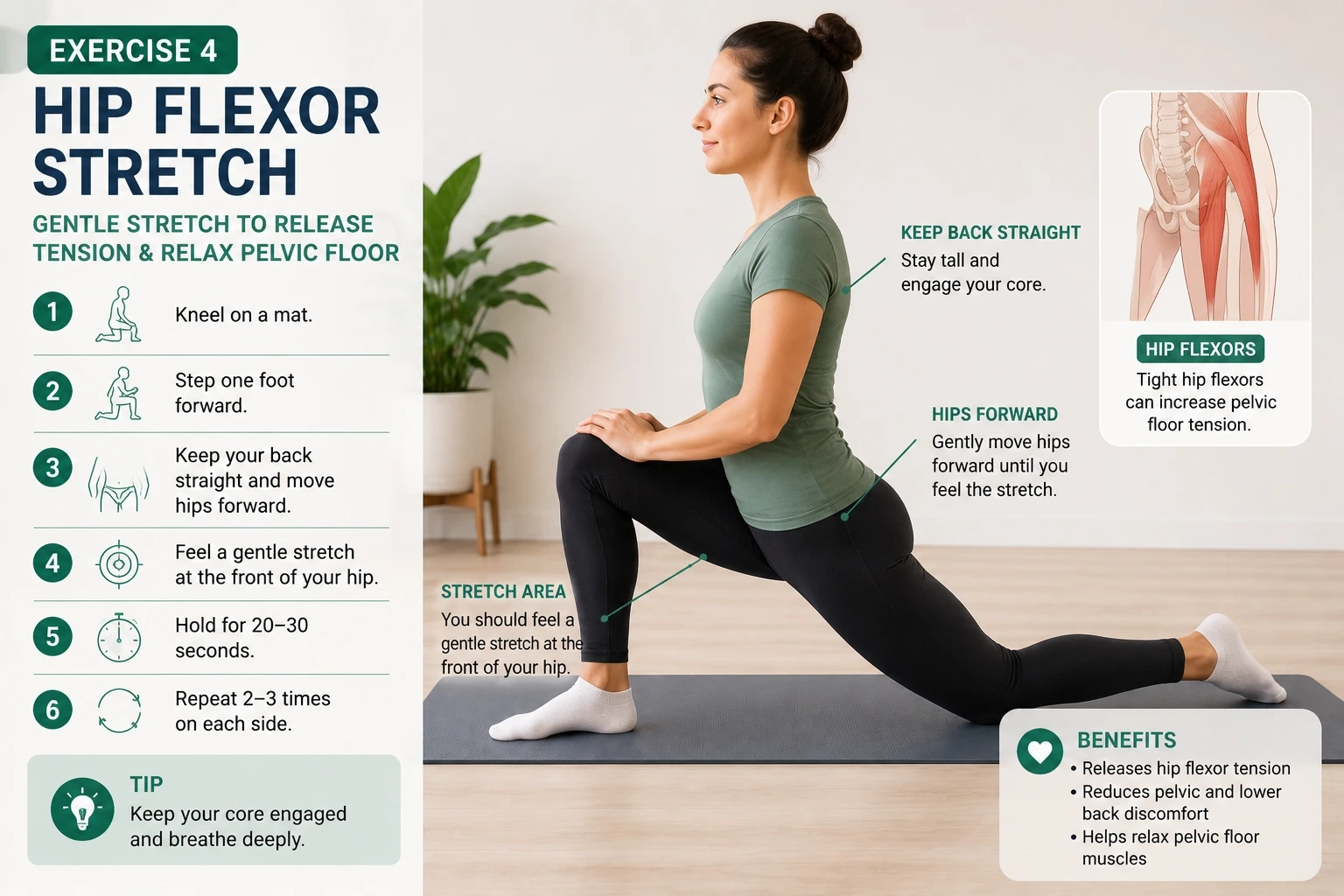
Exercise 4: Hip Flexor Stretch
The hip flexor muscles sit at the front of your hips and upper thighs. Spending long hours sitting, driving, or working at a desk can cause these muscles to become tight. When this happens, they may pull your pelvis forward, increasing tension in the pelvic floor muscles.
Stretching your hip flexors regularly can improve flexibility, reduce pressure on the pelvis, and help your pelvic floor muscles relax more naturally.
How to Perform
-
Kneel on a soft mat or cushion.
-
Step one foot forward so your front knee is directly above your ankle.
-
Keep your back straight and gently move your hips forward.
-
Continue until you feel a comfortable stretch at the front of your hip.
-
Hold for 20 to 30 seconds.
-
Repeat 2–3 times on each side.
You should feel a gentle stretch, never sharp pain.
Exercise 5: Happy Baby Pose
Happy Baby Pose is a gentle yoga stretch that opens the hips, inner thighs, and pelvic floor muscles. It encourages relaxation and is often recommended by pelvic health physiotherapists for people with muscle tightness.
How to Perform
-
Lie comfortably on your back.
-
Bring both knees towards your chest.
-
Hold the outside of your feet or ankles.
-
Allow your knees to move gently apart.
-
Breathe slowly and deeply.
-
Hold the position for 20 to 30 seconds before relaxing.
Avoid pulling forcefully. The stretch should feel comfortable and relaxing.
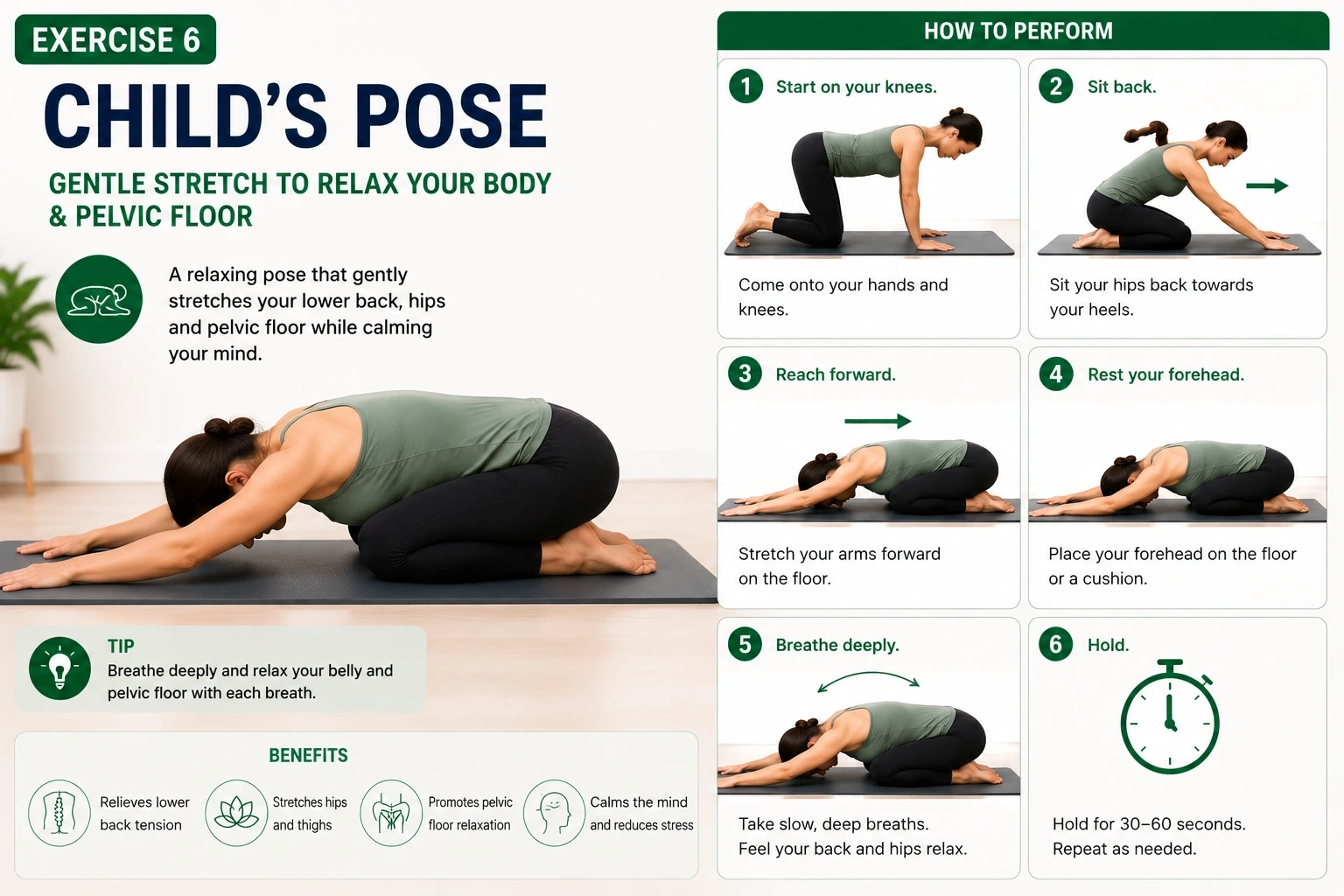
Exercise 6: Child's Pose
Child's Pose is one of the most effective relaxation exercises for the lower back, hips, and pelvic floor.
It combines gentle stretching with deep breathing, helping reduce muscle guarding and improve flexibility.
How to Perform
-
Kneel on the floor or a yoga mat.
-
Sit your hips back towards your heels.
-
Keep your knees comfortably apart.
-
Stretch your arms forward.
-
Rest your forehead on the floor or a cushion.
-
Take slow diaphragmatic breaths for 30 to 60 seconds.
Focus on relaxing your abdomen and pelvic floor with each breath.
Should You Avoid Kegel Exercises?
Many people assume Kegel exercises are the answer to every pelvic floor problem.
However, if your pelvic floor muscles are already tight, performing strengthening exercises too early may actually increase muscle tension and make symptoms worse.
Before beginning Kegel exercises, it's important to understand whether your pelvic floor muscles need to relax, strengthen, or both.
A pelvic health physiotherapist can assess your muscles and recommend the most appropriate treatment plan.
When Should You See a Healthcare Professional?
If your symptoms continue despite regular stretching, or if they become worse, it's important to seek professional advice.
Speak with a healthcare professional if you experience:
-
Ongoing pelvic pain
-
Pain during sex
-
Difficulty emptying your bladder
-
Constipation that doesn't improve
-
Pain during bowel movements
-
Pain during pelvic examinations
-
Persistent urinary urgency or frequency
-
Symptoms affecting your daily life
Early assessment often leads to quicker and more effective treatment.
How Pelvic Floor Physiotherapy Can Help
Pelvic floor physiotherapy is considered one of the most effective conservative treatments for tight pelvic floor muscles.
Your physiotherapist will assess:
-
Pelvic floor muscle tension
-
Breathing patterns
-
Hip and core movement
-
Posture
-
Bladder and bowel habits
-
Everyday movement patterns
Treatment may include:
-
Muscle relaxation techniques
-
Manual therapy
-
Trigger point release
-
Breathing exercises
-
Stretching programmes
-
Lifestyle advice
-
Home rehabilitation exercises
Organisations such as the International Continence Society (ICS) and the American Physical Therapy Association (APTA) recognise pelvic floor physiotherapy as an important treatment for many pelvic floor disorders.
Can a Pelvic Floor Wand Help?
For some people, yes.
When recommended by a qualified pelvic health professional, a pelvic floor wand may help release trigger points and reduce muscle tension as part of a personalised rehabilitation programme.
Many people use a pelvic floor wand alongside physiotherapy exercises and breathing techniques to support recovery.
Can Vaginal Dilators Help?
If pelvic floor tightness makes penetration uncomfortable, some people may also benefit from graduated vaginal dilator therapy.
Dilators help the pelvic floor muscles become more comfortable with gentle, progressive stretching over time.
They are commonly recommended for conditions such as:
-
Vaginismus
-
Pain during sex
-
Pelvic floor dysfunction
-
Recovery after pelvic treatment
Frequently Asked Questions
Can tight pelvic floor muscles relax naturally?
Yes. Many people notice improvement through diaphragmatic breathing, stretching, pelvic floor physiotherapy, and consistent home exercises. Persistent symptoms should be assessed by a healthcare professional.
How often should I stretch my pelvic floor?
Gentle stretching can usually be performed three to five times each week, depending on your symptoms and your healthcare professional's advice.
Is walking good for a tight pelvic floor?
Gentle walking may help improve circulation and reduce muscle stiffness, but it should be combined with stretching and relaxation exercises if pelvic floor tightness is present.
Can stress tighten the pelvic floor?
Yes. Stress and anxiety may increase muscle tension throughout the body, including the pelvic floor. Relaxation techniques and breathing exercises can help reduce this tension.
Can sitting too much affect the pelvic floor?
Yes. Long periods of sitting may contribute to hip stiffness and increased pelvic floor tension. Taking regular movement breaks and stretching throughout the day can help.
Final Thoughts
A tight pelvic floor can affect many aspects of daily life, from bladder and bowel function to intimacy and general comfort. The encouraging news is that, for many people, symptoms improve with the right combination of education, breathing techniques, stretching, and pelvic floor physiotherapy.
Remember that healthy pelvic floor muscles need both strength and flexibility. If your muscles are already tight, learning to relax them is often the first step towards recovery. Consistency is important, and even a few minutes of gentle stretching each day can make a meaningful difference over time.
If symptoms continue or interfere with your quality of life, don't hesitate to seek advice from a qualified healthcare professional. Early assessment and a personalised treatment plan can help you return to comfortable movement and better pelvic health.
Related Articles
Continue learning with our other pelvic health guides:
Suggestions & Comments
Share your thoughts about this article. Comments are reviewed before they appear publicly.
Loading comments…