Blog
Vaginal Dilators for Vaginismus How Do They Work
Dr Emily Carter · 5 August 2026 · 7 min read · 2,806 views
Vaginismus can make vaginal insertion uncomfortable, painful or sometimes impossible. The muscles around the vaginal opening tighten automatically when penetration is attempted or anticipated, even when the person wants penetration to happen.
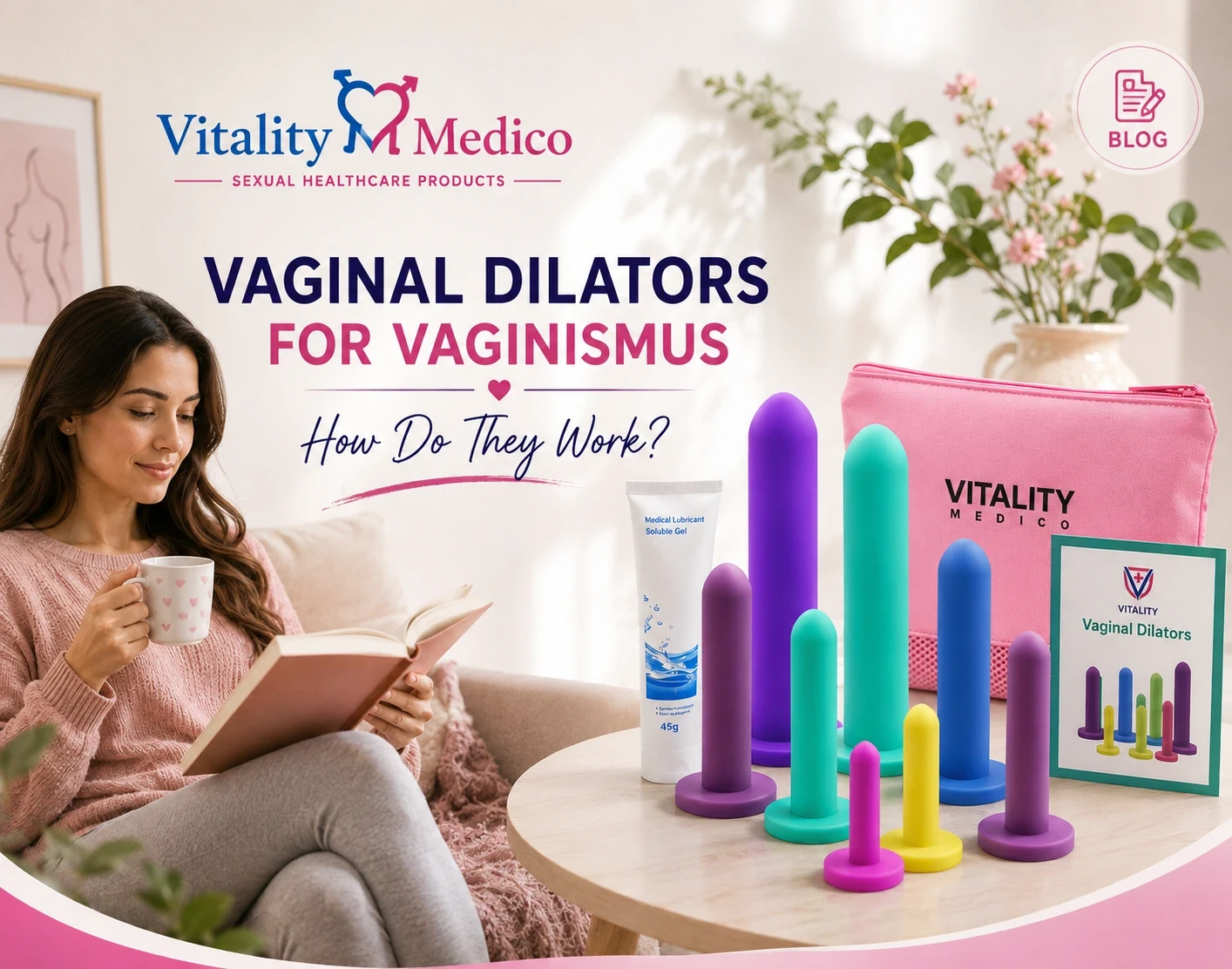
Vaginal dilators are commonly used as part of vaginismus treatment. Available in graduated sizes, they allow someone to become accustomed to insertion at their own pace and in a controlled setting.
The purpose is not to tolerate pain or reach the largest size as quickly as possible. Dilator therapy focuses on reducing muscle guarding, becoming more familiar with insertion and building tolerance step by step.
What Is Vaginismus
Vaginismus involves an involuntary tightening of the muscles around the vaginal opening when penetration is attempted or expected.
Symptoms can include:
-
Pain or burning during attempted penetration
-
Difficulty inserting a tampon
-
Difficulty with vaginal examinations
-
A feeling that something is blocking penetration
-
Tension or anxiety before insertion
-
Pain during sexual intercourse
The muscle response is involuntary. Simply trying harder to relax may not be enough to stop it.
Vaginismus also varies considerably between individuals. Some people find any vaginal insertion difficult, while others can use a tampon or undergo an examination but experience problems with sexual penetration.
Pain during penetration can have several causes, so persistent or unexplained symptoms should be properly assessed.
What Are Vaginal Dilators
Vaginal dilators are smooth devices available in a series of different widths and sometimes different lengths.
A typical set begins with a small dilator and progresses through larger sizes. This allows the user to start at a manageable level rather than immediately attempting a larger insertion.
Dilators are commonly made from medical grade silicone or body safe rigid plastic.
The smaller sizes can be particularly useful at the beginning of vaginismus therapy. Once a size becomes easier to use without significant pain or muscle tightening, progression to another size may be considered.
This step by step approach gives the pelvic floor time to adapt without placing unnecessary pressure on the body.
How Do Vaginal Dilators Help Vaginismus
With vaginismus, attempted penetration can trigger an automatic tightening of the pelvic floor muscles. Anticipating pain may also contribute to this response.
Dilators provide a way to introduce insertion in a setting where the user controls the size, depth and pace.
Over time, this may help with several aspects of vaginismus.
Pelvic Floor Relaxation
Dilator sessions can help someone become more aware of when the pelvic floor is tightening and practise relaxing those muscles during insertion.
Becoming More Familiar With Insertion
Starting with a smaller size can make insertion feel more manageable. Repeated experiences without significant pain may help reduce the body's protective response.
Reducing Fear Around Penetration
The user remains in control of when the dilator is inserted, how far it goes and when it is removed. This can remove some of the pressure associated with other forms of penetration.
Moving Through Different Sizes
Graduated sets allow the diameter to increase in smaller steps. Progress is based on how the body responds rather than following a strict timetable.
Pelvic floor tension can affect people in different ways. Our Pelvic Floor Dysfunction guide explains how pelvic floor muscles can become too tight or overactive and the symptoms this may cause.
How Do You Start Using Vaginal Dilators
The starting size should be one that can be introduced without forcing or significant pain.
This is often the smallest dilator in the set, although not everyone needs to begin with size one.
Before use, read the instructions supplied with the product.
Choose a private setting where you are unlikely to feel rushed. A comfortable position and slow breathing can make it easier to recognise and reduce pelvic floor tension.
Apply a suitable lubricant to help minimise friction. The dilator can then be introduced slowly according to your treatment instructions.
If the muscles tighten considerably or insertion becomes painful, stop rather than pushing against the resistance.
Should Vaginal Dilators Hurt
Dilator therapy should not involve pushing through significant pain.
Some people may notice mild pressure or a stretching sensation, particularly when changing sizes. Sharp, severe or worsening pain is different and should not simply be ignored.
Trying to force a dilator when the pelvic floor is strongly tightening can make the experience more difficult and may reinforce muscle guarding.
If a new size does not feel manageable, returning to the previous size is reasonable.
There is no need to treat each larger dilator as a target that must be reached.
When Should You Move to the Next Dilator Size
There is no fixed number of days or sessions before moving up a size.
A better indication is how your body responds to the current dilator.
When insertion of the current size becomes manageable without significant pain or strong muscle tightening, it may be appropriate to try the next size.
Some people move through several sizes while others only need to reach a particular size for their treatment goal.
Completing every size in the set is not necessarily required.
Silicone vs Plastic Vaginal Dilators
Both silicone and rigid plastic dilators are used for vaginal dilation, but they feel different during use.
Silicone Vaginal Dilators
Silicone vaginal dilators have a softer and slightly more flexible feel. Some users prefer silicone when sensitivity around the vaginal opening makes a rigid device less appealing.
Their smooth surface and softer feel can also make them suitable for people who prefer a less rigid introduction to dilation therapy.
Vitality Medico Europe offers Silicone Vaginal Dilator Sets in graduated sizes for controlled progression.
BPA Free Plastic Vaginal Dilators
BPA free plastic vaginal dilators are firmer and maintain their shape during use.
The rigid construction can provide more precise control over positioning and movement and may be preferred in certain treatment programmes.
Vitality Medico Europe also provides BPA Free Plastic Vaginal Dilators in graduated sizes.
Neither material is automatically better. The right choice depends on sensitivity, personal preference and the reason dilation has been recommended.
What Lubricant Should You Use
Lubrication helps reduce friction during insertion.
A water based lubricant is commonly suitable for vaginal dilators, although the instructions supplied with your particular product should always be checked.
This is especially important with silicone products because not every lubricant is compatible with every material.
Stop using any lubricant that causes burning, irritation or other unwanted symptoms.
How Often Should Vaginal Dilators Be Used
There is no universal schedule for dilator therapy.
Frequency depends on why the dilators are being used, how your body responds and the treatment plan you have been given.
Long sessions are not necessarily more effective. Shorter sessions at a manageable pace may be more useful than trying to do too much at once.
Allowing the pelvic floor time to adjust is an important part of the process.
Dilators Are Only One Part of Vaginismus Treatment
Vaginal dilators can be useful for vaginismus, but they are not necessarily the complete treatment.
Depending on the individual, treatment may also include:
-
Pelvic floor physiotherapy
-
Breathing and relaxation techniques
-
Pelvic floor awareness exercises
-
Psychosexual or psychological support
-
Education about pelvic floor anatomy
-
Treatment of other conditions contributing to pain
For some people, physical muscle tension is a major part of the problem. For others, pain anticipation, previous painful experiences or other factors may also be involved.
Treatment therefore needs to reflect the individual rather than following the same routine for everyone.
Vaginal Dilator or Pelvic Wand
Vaginal dilators and pelvic wands are both used in pelvic health therapy, but they are designed for different types of work.
A vaginal dilator provides a relatively even stretch around the vaginal opening and canal. This makes dilators particularly relevant when difficulty with insertion, vaginismus or vaginal tightness is being addressed.
A pelvic wand has a curved shape designed for more targeted pressure on particular areas of pelvic floor muscle tension.
Some people may eventually use both depending on their symptoms and pelvic floor assessment.
For a more detailed comparison, read our Pelvic Wand vs Vaginal Dilator Which One Is Right for You guide.
Common Mistakes When Using Vaginal Dilators
A common mistake is treating the next size as something that must be reached quickly.
Other problems can include:
-
Starting with a dilator that feels too large
-
Pushing against strong muscle resistance
-
Using too little lubricant
-
Changing sizes before the current one feels manageable
-
Continuing despite significant pain
-
Comparing your progress with someone else's
-
Using dilators without investigating persistent pelvic or vaginal pain
The purpose of a graduated set is to provide different options. It is not a challenge to complete every size.
When Should You Seek Medical Advice
Speak with a doctor, gynaecologist or pelvic health physiotherapist if you have persistent or unexplained pain during penetration.
Professional assessment is particularly important if you experience:
-
Vaginal bleeding that is not expected
-
Severe or worsening pelvic pain
-
Unusual vaginal discharge
-
Recurrent infections
-
New or unexplained symptoms
-
Pain that continues despite changing your approach
Painful penetration is not always caused by vaginismus. Other pelvic, vaginal and gynaecological conditions can produce similar symptoms.
An assessment can help establish what is contributing to the problem and whether vaginal dilators are appropriate.
Frequently Asked Questions
Are Vaginal Dilators Effective for Vaginismus
Vaginal dilators are commonly used as part of treatment for vaginismus and penetration difficulties.
They may be combined with pelvic floor physiotherapy, relaxation techniques or psychological and psychosexual support depending on the person's needs.
They should be viewed as one tool within a wider treatment approach rather than a guaranteed standalone solution.
What Size Vaginal Dilator Should I Start With
Start with a size that can be introduced without forcing or causing significant pain.
For many people this will be the smallest dilator, but this is not a rule. The appropriate starting point depends on your current tolerance and treatment goals.
How Quickly Should I Move Through the Sizes
There is no standard timetable.
Consider moving up when the current size has become manageable and can be used without significant pain or strong muscle guarding.
Taking longer with one size does not mean the therapy is failing.
Can I Use a Vaginal Dilator Every Day
Daily use is not automatically necessary.
The appropriate frequency depends on your treatment plan and how your body responds. Follow the instructions provided with your dilator and any clinical guidance you have received.
Can Vaginal Dilators Cure Vaginismus
Dilators are better considered part of vaginismus treatment rather than a cure by themselves.
Vaginismus can involve involuntary pelvic floor muscle tightening alongside pain anticipation and other physical or emotional factors.
For this reason, some people benefit from combining dilator therapy with pelvic floor physiotherapy or other professional support.
Do I Need to Use the Largest Dilator
No.
The goal is not to complete the set. The appropriate end point depends on why you are using dilators and what you want or need to achieve from treatment.
Vaginal Dilators for Vaginismus The Bottom Line
Vaginal dilators offer a controlled way to become more accustomed to vaginal insertion when vaginismus is associated with involuntary pelvic floor tightening.
The most important part is not how quickly you reach a larger size. What matters is allowing the body to adjust at a suitable pace without treating pain as something that needs to be overcome.
Choose an appropriate starting size, use sufficient lubrication and progress according to how your body responds.
Vitality Medico Europe provides silicone vaginal dilators, BPA free plastic vaginal dilators and other pelvic health products for use as part of appropriate pelvic health therapy.
If penetration remains painful or you are unsure whether vaginismus is causing your symptoms, speak with a gynaecologist or pelvic health physiotherapist for an appropriate assessment.
Suggestions & Comments
Share your thoughts about this article. Comments are reviewed before they appear publicly.
Loading comments…